
Monsoon damp and mould: telling a cleaning job from a repair
The same dark patch can be surface growth or water coming through a wall. They look identical and need completely different work — here is how to tell.
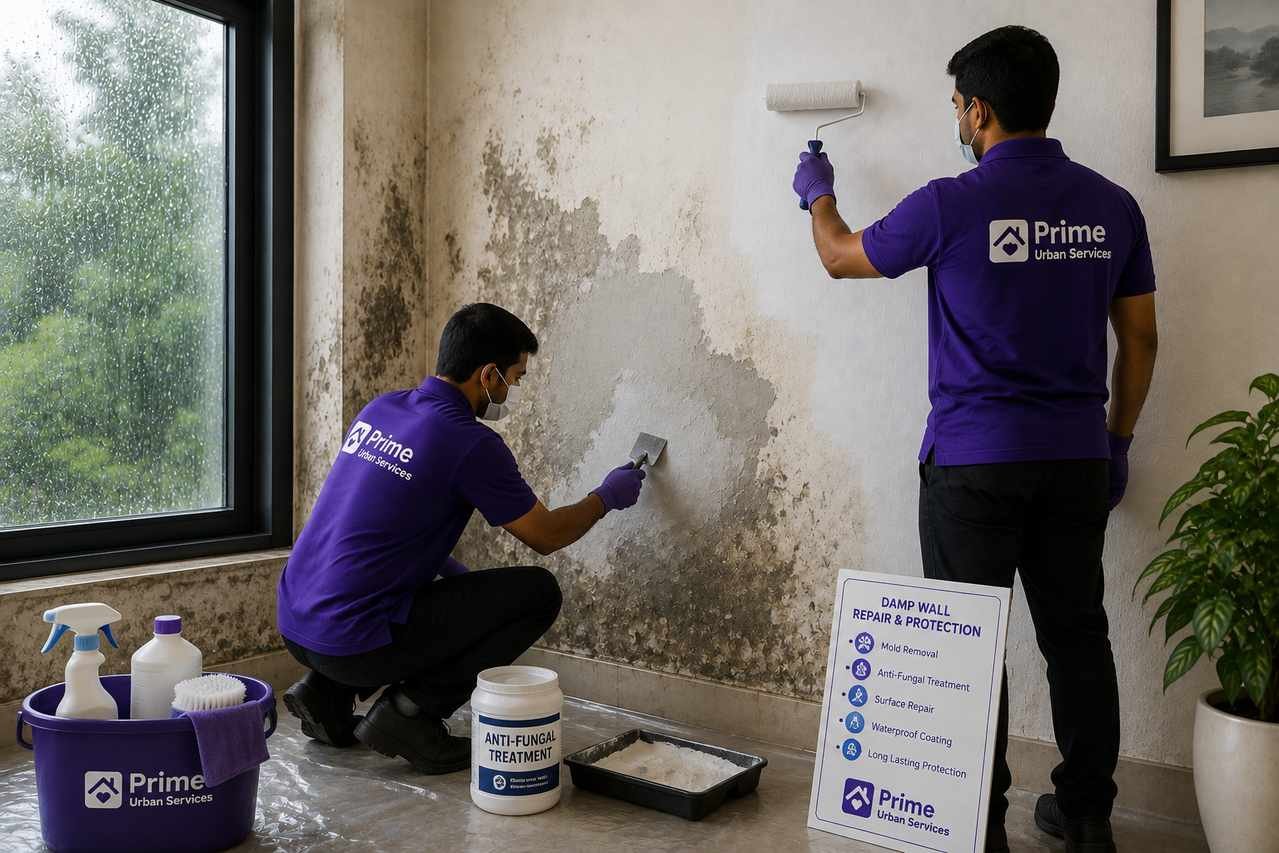
Every monsoon, homes across Mumbai, Kochi, Kolkata and the coastal belt develop the same set of complaints: musty wardrobes, dark grouting, a chalky bloom on painted walls, and patches on ceilings. Some of it clears with a proper clean and stays gone for months. Some of it comes back within a week. Telling the two apart before spending money is the useful skill.
Surface growth versus water ingress
Surface growth sits on grouting, silicone joints and tile faces. It is fed by air moisture and poor airflow rather than by water arriving from anywhere. Cleaned properly — worked into the porous grout rather than wiped over — it clears and stays clear for a reasonable stretch, and how long depends almost entirely on ventilation.
Water ingress is different. It shows on ceilings, on the upper part of a wall, often near a corner, and it very frequently sits on an outer wall or below a bathroom in the flat above. Cleaned, it returns in days, because the water is still arriving.

The wardrobe smell nobody solves
A wardrobe that smells musty within days of being emptied and wiped is almost never a wardrobe problem. Check the wall behind it. If that wall is an external face, or backs onto a bathroom, moisture is coming through and settling in the enclosed space.
Cleaning clears the growth and the smell. Keeping it gone means dealing with the wall, or at minimum leaving a gap between the wardrobe and the wall so air can move behind it.
Ventilation does more than any product
In a bathroom, the exhaust fan decides how long a clean lasts more than the clean itself does. A vent cover clogged with dust and grease looks perfectly normal from below while blocking most of the airflow, and a room that stays steamy for an hour after a shower is a room where growth never really stops.
- Check whether the vent cover is clogged — it usually is, and it usually looks fine.
- Leave the bathroom door open after use so the room can actually dry.
- Pull furniture a few centimetres off external walls where you can.
- Do not stack clothes tight in a wardrobe on an outer wall during the monsoon.
When to book
Just after the rains break is the most useful window — late September into October for most of the country, and December onwards in Chennai and the southeast, where the northeast monsoon runs later. That is when the season's build-up is at its worst, and the drier weeks that follow let the result actually hold.
Cleaning mid-monsoon works if the mustiness has become unbearable, but be realistic: you will probably want it done again once the season ends.
What will not come back
Some things are permanent and it is better to know upfront. Grouting that has cracked needs re-grouting rather than cleaning. Paint that has blistered from behind will keep blistering until the wall is dealt with. A ceiling that has been wet repeatedly may need repainting once the source is fixed. Cleaning gets you to a clear starting point — it does not substitute for the repair.
Bathroom Cleaning available in your city
Prices, packages and available slots differ by city. Pick yours to see what applies where you live.