
Hard water stains: what cleaning can fix, and what it cannot
Scale is a mineral deposit bonded to the surface, not dirt sitting on it. That single fact explains why scrubbing never wins — and where the real limits are.
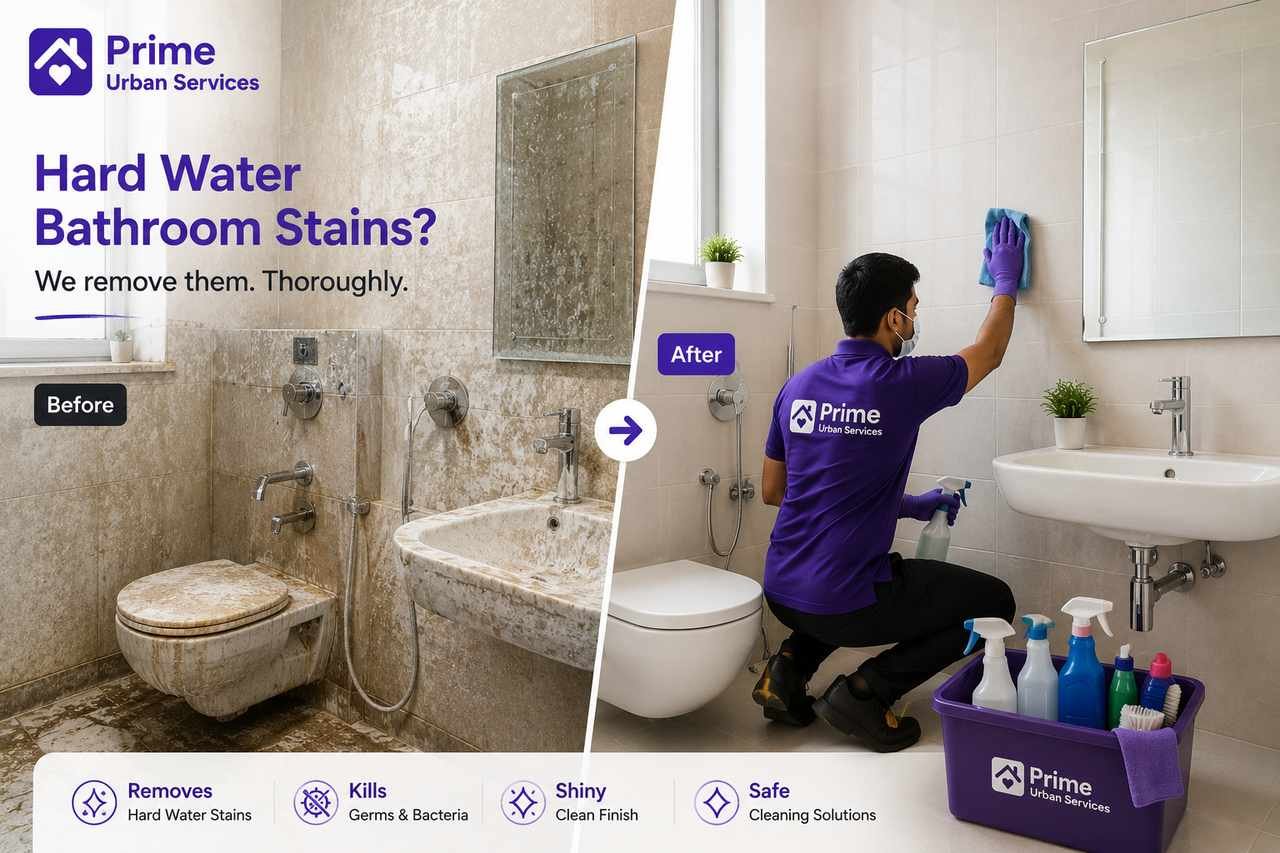
If your taps have a white crust that comes back within days of scrubbing, you are not cleaning badly. You are fighting the wrong thing. Scale is a mineral deposit that has bonded to the surface, and scrubbing removes whatever loose residue sits on top of it while leaving the bond completely intact.
Why the crust returns so fast
Think of it as a layer that is chemically attached rather than resting there. A cloth takes off the dust and soap film above it. The moment the fitting is used again, fresh minerals deposit onto the layer that was never removed, and within a few days it looks exactly as it did. This is why households eventually conclude a fitting is simply old and give up on it.
Descaling breaks that bond instead of polishing over it. Taps, shower heads, drain covers and ceramic tile usually come back close to their original finish, and the difference is often dramatic enough that people assume the fittings were replaced.
The part nobody mentions: flow
Long before scale is visible on the outside of a fitting, it is narrowing the inside. Tap aerators and shower heads block hole by hole, and water pressure drops so gradually that most households adjust without noticing. People blame the building tank or the municipal supply.
If your shower has felt weak for a year, clean the head before assuming anything else is wrong. It is the cheapest thing on the list and it very often is the answer.

Where the honest limits are
Shower glass
If the cloudiness is scale and soap film sitting on the surface, it comes off and the glass genuinely clears. If the panel has been left for several years, the minerals can etch into the glass — that is physical damage to the material, not a deposit on it. Etched glass will be clean afterwards but keeps a faint permanent haze, and no cleaning method reverses it. Replacing the panel is the only fix.
Stone surfaces
Marble, sandstone and other natural stone are porous and calcium-based, which means an acidic descaler does not clean them — it dissolves the surface. The result is dull etched patches where the polish used to be, and only a stone specialist can polish that out.
Old chrome
Chrome that has pitted stays pitted. The plating has already been breached and cleaning cannot rebuild it. Fittings that are merely dulled, on the other hand, usually recover well.
How to slow it down between cleans
- Squeegee the shower glass after each use — the single most effective habit in a modern bathroom.
- Wipe taps dry after use rather than letting droplets evaporate in place; evaporation is what leaves the mineral behind.
- Keep the exhaust fan clear. A vent clogged with dust and grease looks fine from below but moves almost no air, and a bathroom that stays damp for an hour gives deposits far longer to bond.
None of this stops hard water. It just means the next deep clean starts from a much better place, and the interval between them stretches considerably.
Bathroom Cleaning available in your city
Prices, packages and available slots differ by city. Pick yours to see what applies where you live.